The main points
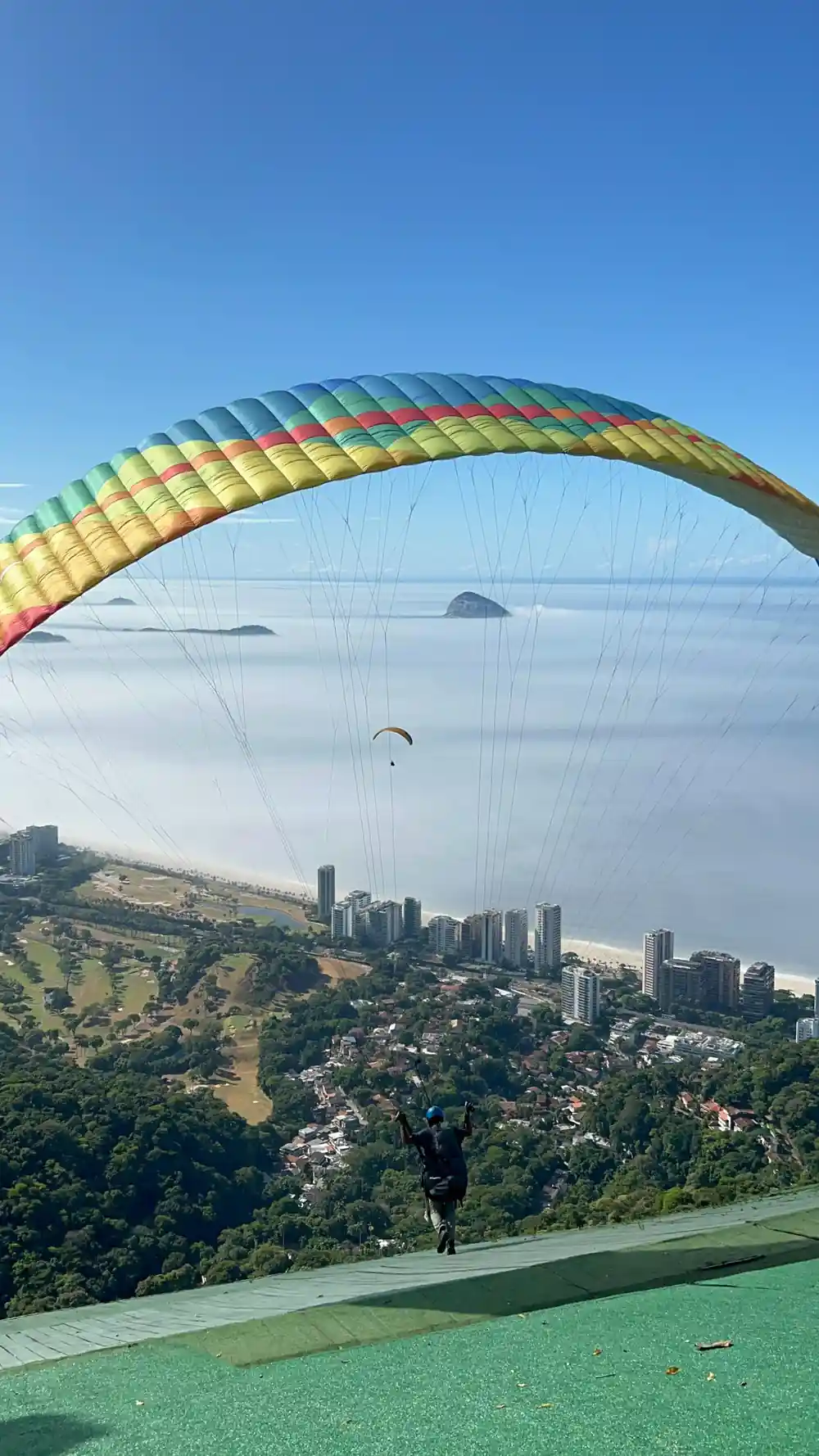
- The flight launches from a wooden ramp built out from the hillside at Pedra Bonita, reached by a drive through the Tijuca forest.
- A ramp removes the need for a long run, because the ground simply stops, so the flight begins the moment the deck ends rather than partway down a slope.
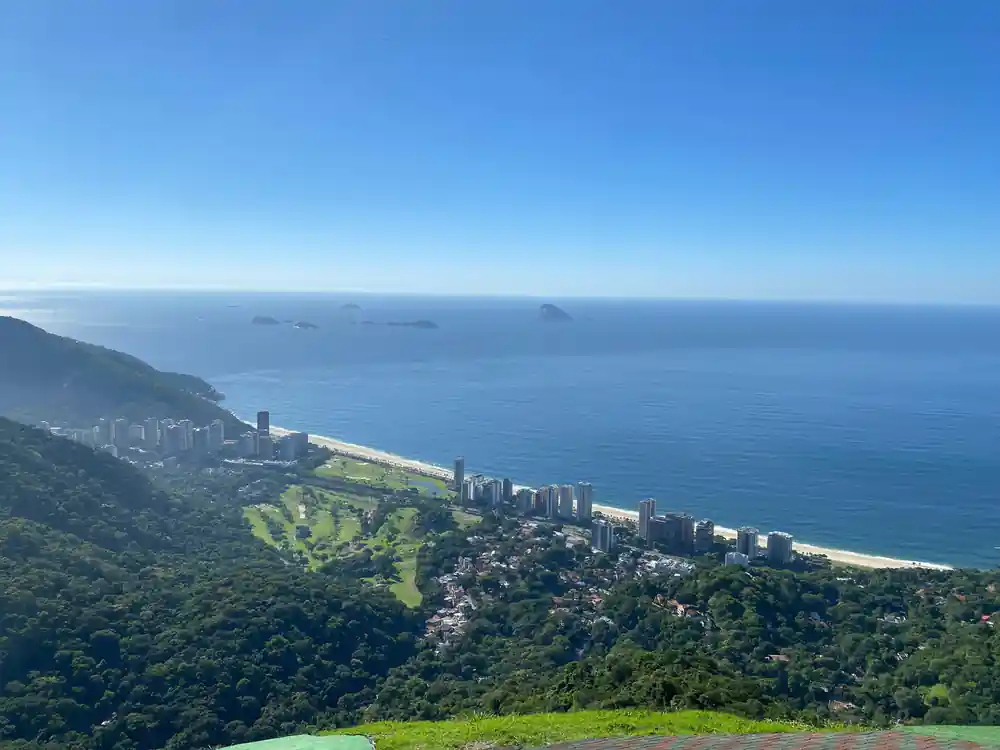
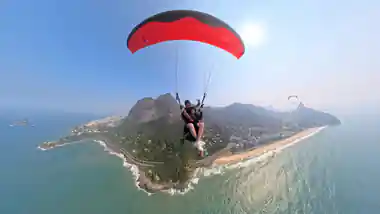
- The flight lands on Sao Conrado beach, at sea level below Pedra Bonita, with the city of Rio de Janeiro around the beach.
- The booking runs three hours: about fifteen minutes driving up to the ramp, about forty minutes at the ramp and in the air, and the rest spent waiting for conditions.
The Ramp at Pedra Bonita
Pedra Bonita is the rock that rises above Sao Conrado, on the edge of Rio de Janeiro. Paragliding over Rio de Janeiro begins here, at a wooden ramp built out from the hillside, and that ramp is the detail that sets this flight apart from a launch off open ground.
The ramp sits at the edge of the rock, projecting out into open air rather than following the slope down. It is a fixed, purpose-built deck, not a cleared patch of hillside, and everything about the launch that follows depends on that one fact.
Why a Ramp Removes the Run
A paraglider needs air moving fast enough across the wing to fly, and on open ground that speed is usually built by running, sometimes for a real distance, down a slope while the wing fills above you. A ramp changes that arithmetic. Because the wooden deck simply stops at its edge, there is no long run to make: a few strides carry you to the end of the platform, and the flight begins there instead of gradually somewhere down a hillside.
That is the real difference between a ramp launch and a slope launch, and it is worth knowing before you go, because it changes what the first moments feel like. On a slope, the ground and the flight blur into each other as you run and the wing slowly takes your weight. Off the ramp at Pedra Bonita, the ground ends at a definite point, and the moment you are flying is the moment you are no longer standing on anything at all.
The wooden ramp at Pedra Bonita, built out from the hillside above Sao Conrado.
The Drive Up Through Tijuca Forest
Getting to the ramp is part of the booking, not something arranged separately. From the flight club in Sao Conrado, a car takes you up to Pedra Bonita, a drive of about fifteen minutes on the road that climbs through the Tijuca forest.
Tijuca is a large area of protected forest inside the city, and the road runs through it rather than around it, so the drive itself is a change of surroundings: the streets and buildings of Sao Conrado give way to forest cover before the road reaches the open ground at the top, where the ramp is waiting.
At the Ramp and In the Air
The booking runs three hours in total, though not all of that time is spent moving. About fifteen minutes goes on the drive up, and about forty minutes covers your time at the ramp and the flight itself. The rest of the three hours is spent waiting for conditions at Pedra Bonita to be right for flying.
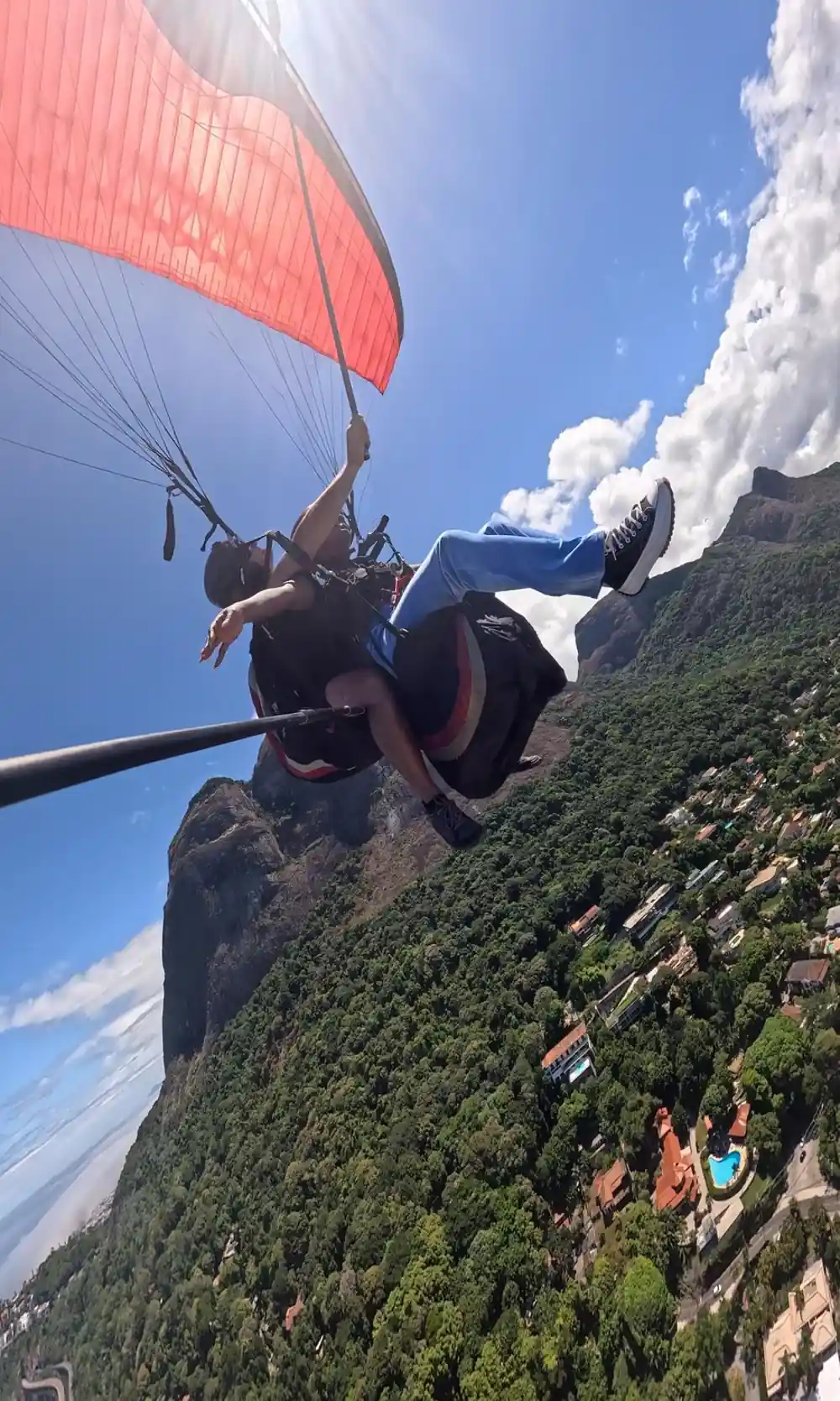
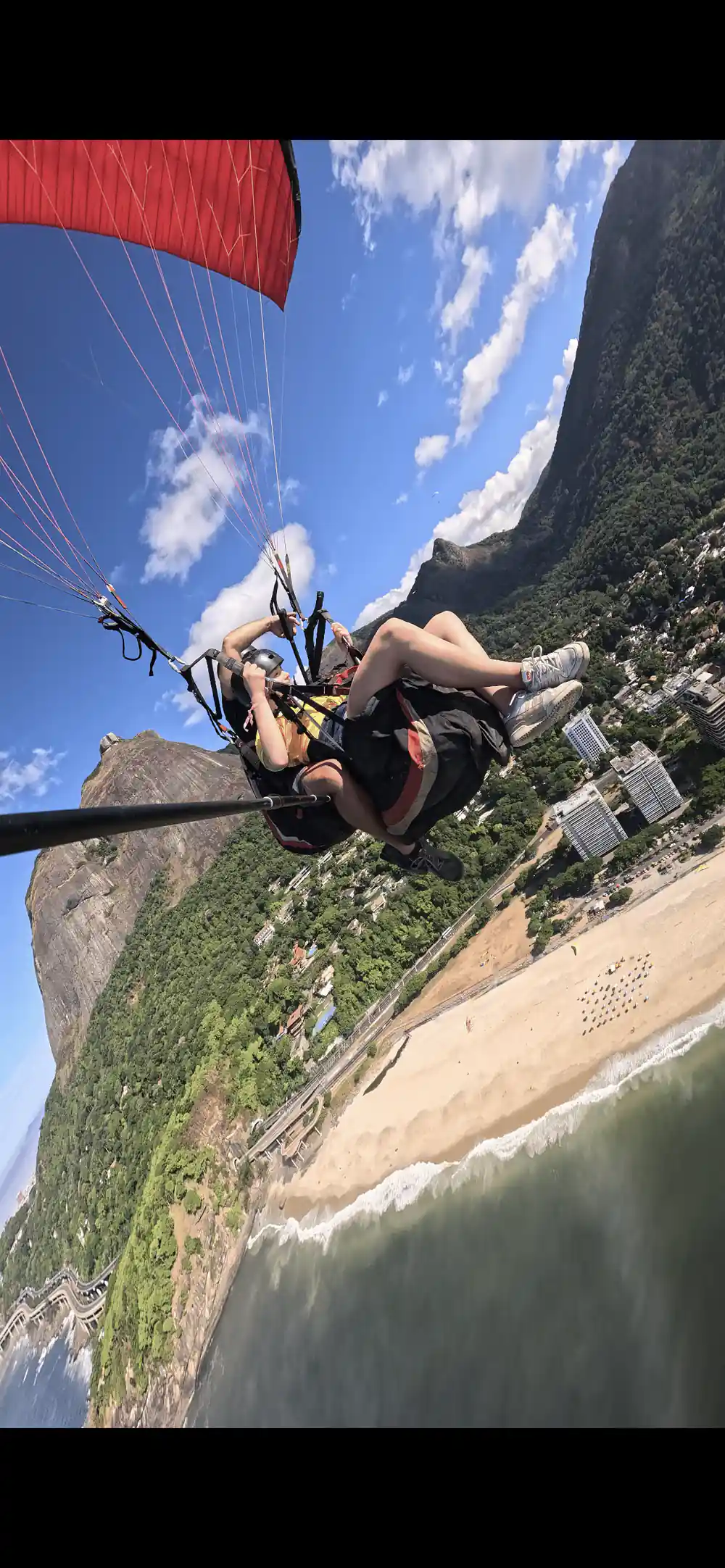
Once your turn comes, the forty minutes at the ramp and in the air is where you are fitted with the safety equipment and harnessed to your instructor, Sandro Cardoso, for the tandem flight itself. A GoPro records the whole thing, from the ramp to the beach, so the flight is filmed without you having to hold or operate anything.
40 minutes
That is the combined time at the Pedra Bonita ramp and in the air, inside a three-hour booking where the rest is spent waiting for flying conditions.
Landing on Sao Conrado Beach
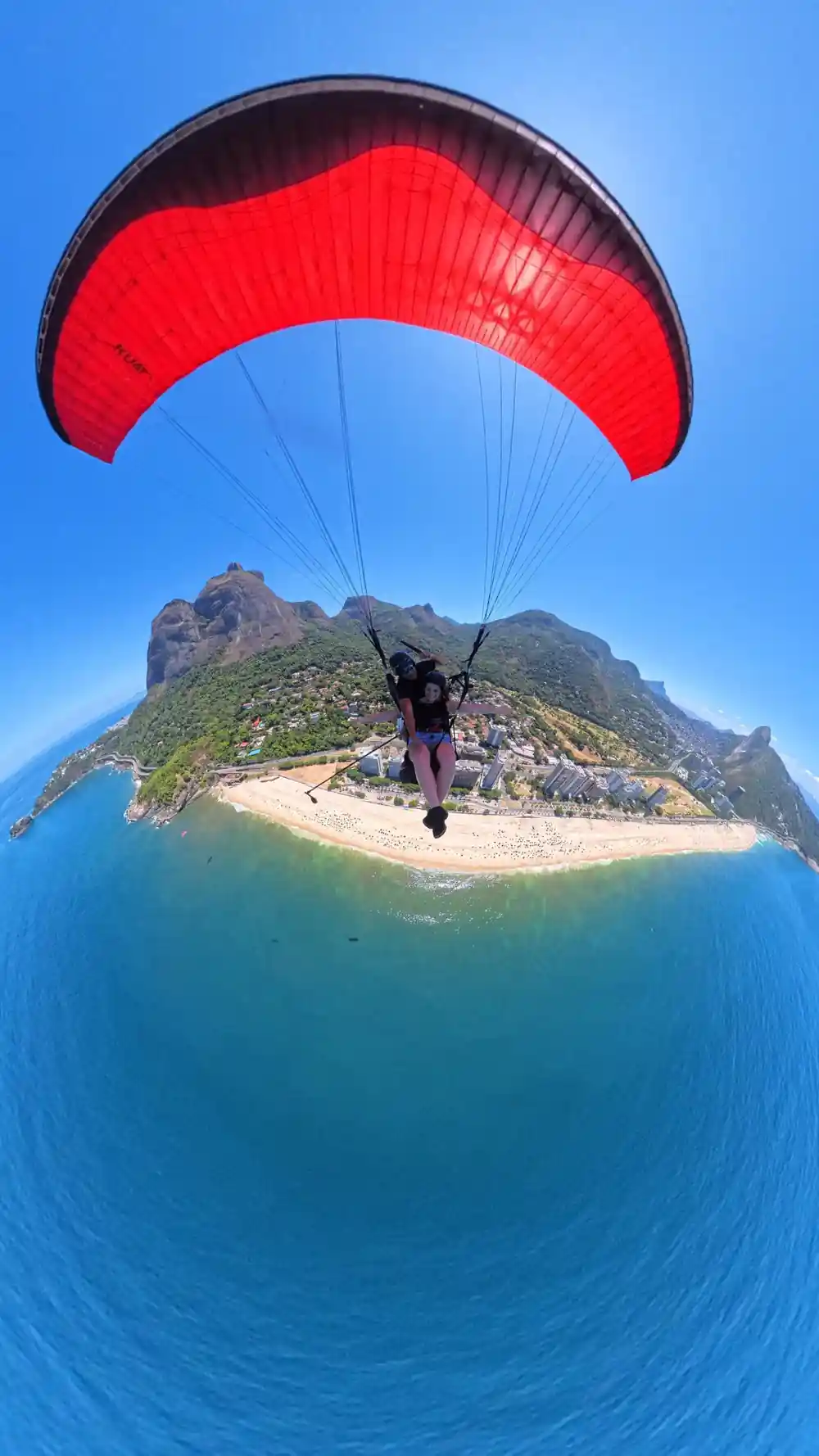
The flight ends on Sao Conrado beach, below Pedra Bonita and at sea level. That change of surface, from a wooden ramp on a hillside to open sand by the water, happens inside the same forty-minute window as the launch.
Sao Conrado is the beach and the neighbourhood beneath the rock, and it is both where the booking starts, at the flight club, and where it finishes: once everyone has landed, the group makes its way back to the club to complete the day.
The Forest, the Ridge, the Beach and the City
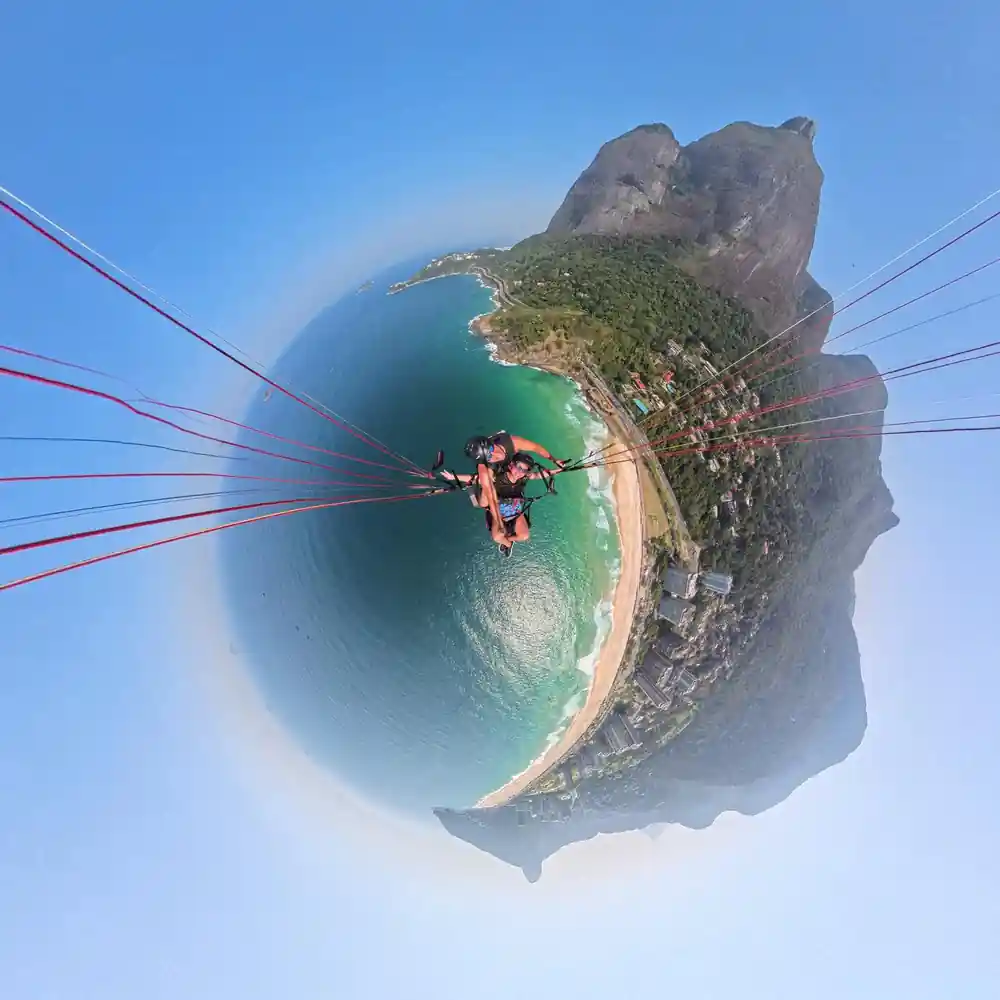
What passes beneath the wing on the way down is a sequence rather than a single view: the forest canopy of Tijuca first, then the line of the ridge the ramp is built into, then the beach and the city of Rio de Janeiro spreading out along the coast. Each one replaces the last as the ground gets closer.
The forest reads as one continuous green mass rather than individual trees, and the city below settles into blocks and streets rather than separate buildings, right up until the beach arrives close enough to become a specific place again with people and umbrellas on the sand.
Starting at the Flight Club in Sao Conrado
The flight starts at the Clube Sao Conrado de Voo Livre, the free-flight club in Sao Conrado, where you go to the flight school and say you have an appointment with your instructor. Transport from the club up to the Pedra Bonita ramp is included, along with the safety equipment and the tandem flight itself, ramp to beach. The GoPro footage of the whole flight is included too.
Not everything is covered. Images from the club's 360-degree camera are separate, and so is a club fee that is payable on the day. Anything you buy at the club is not included either, and neither is transport between your hotel and the club, in either direction. The club has toilets, drinking water, changing rooms and showers, all available to use. Guiding is offered in English, Spanish, Portuguese and French, and free cancellation is offered on the booking.
The flight is not suitable for children under 14, for pregnant women, or for anyone over 100 kg (220 lbs). Those three limits apply to everyone booking the flight, regardless of the language it is booked in.
See available dates for the flight off the Pedra Bonita ramp
from US$178Reserve now & pay later