The main points
- A tandem instructor, Sandro Cardoso, flies the wing and makes every call in the air; you are clipped into a harness and carried along for the flight.
- You are clipped into your own harness, fixed to the same wing as the pilot, seated in front of him for the whole flight.
- The flight only goes ahead when conditions at Pedra Bonita allow it, and free cancellation is offered if they do not.
- Three hours is a real slice of a short trip to Rio, and in return you get a view of the city that has no other way of being seen.
A Wing, Not a Parachute
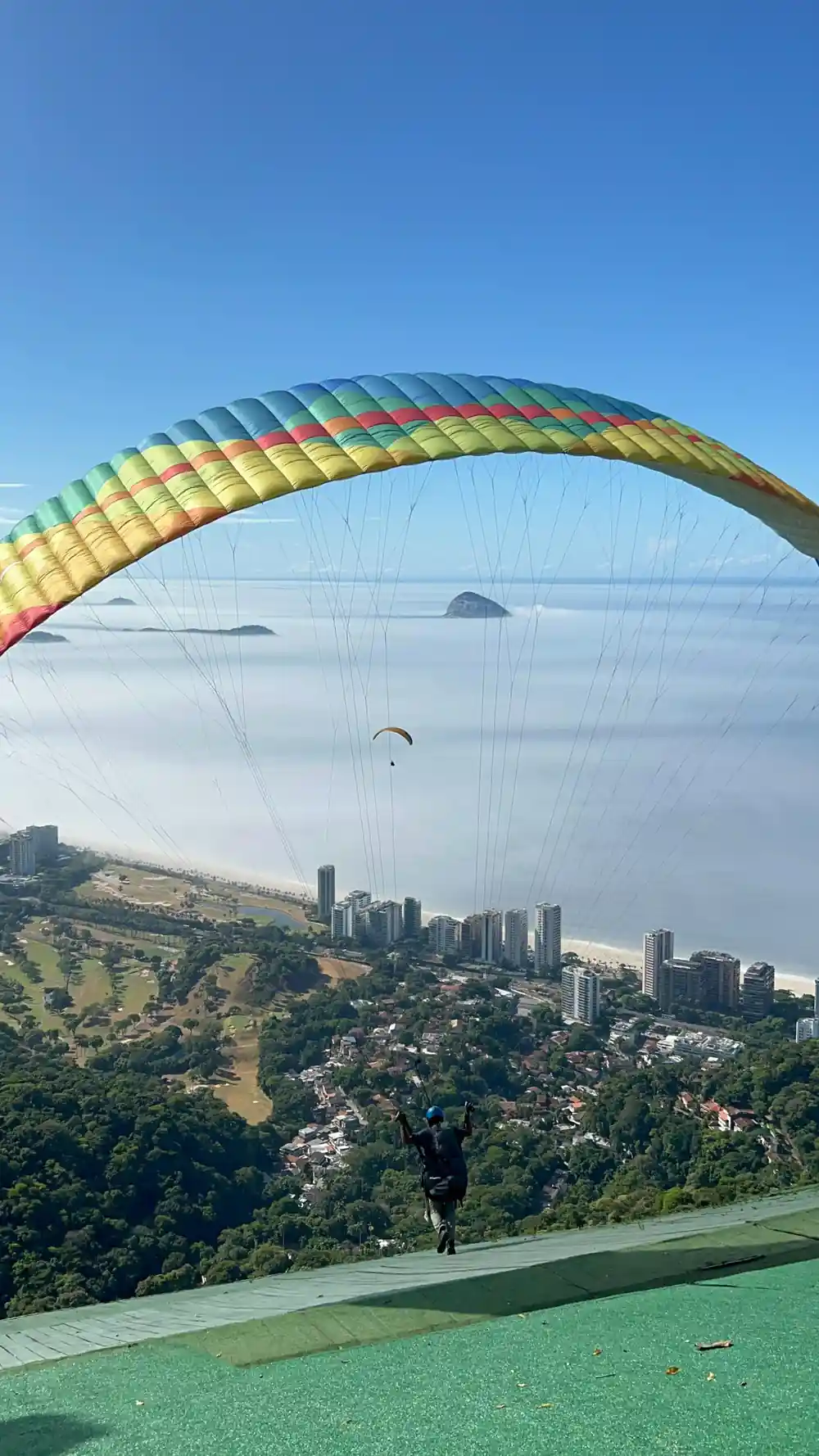
Paragliding sounds like it should involve falling until something opens, and anyone picturing a parachute jump is bringing the wrong image to Pedra Bonita. A paraglider is a wing, not a parachute. It is already open, already full of air and already generating lift before your feet leave the wooden ramp, working on the same basic idea that keeps an aircraft wing flying rather than the idea that keeps a falling object from hitting the ground too hard.
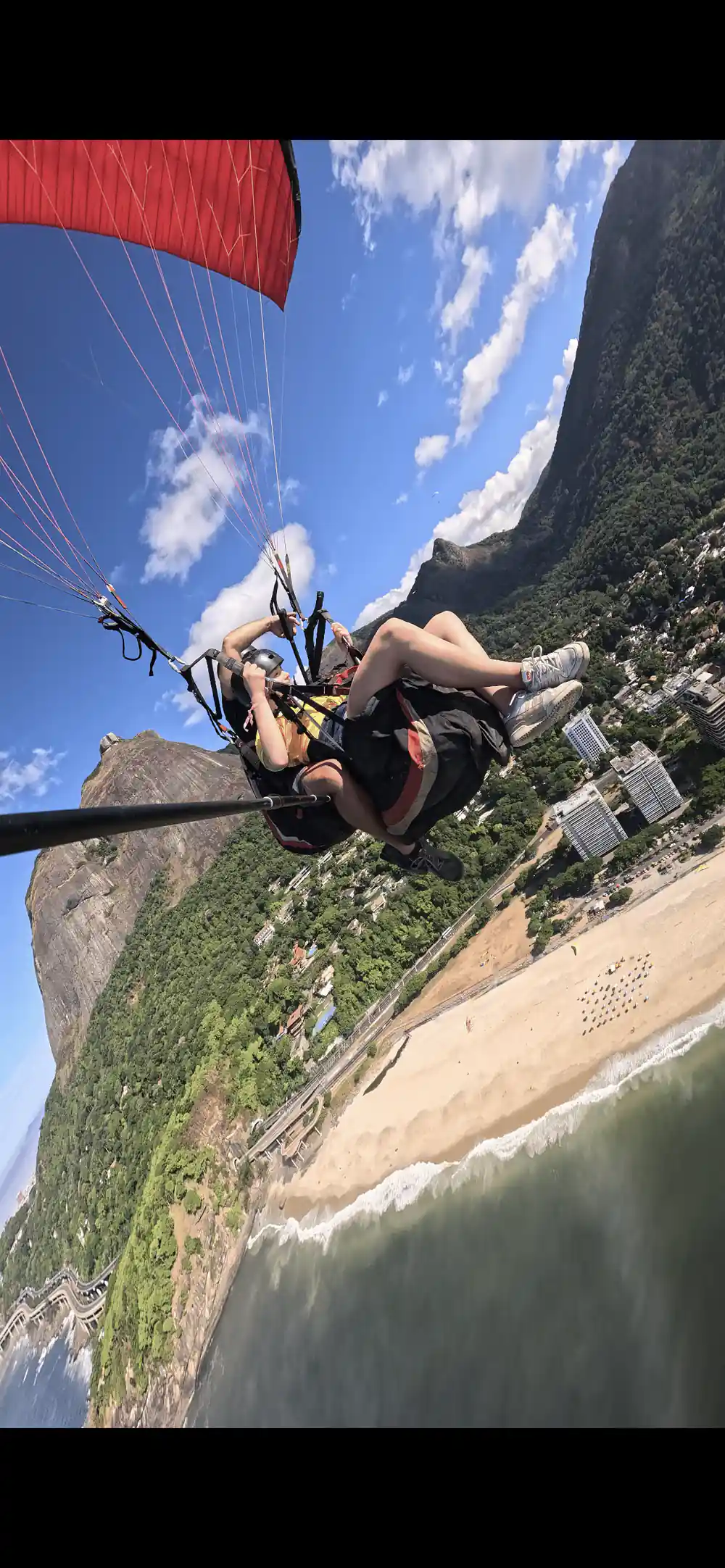
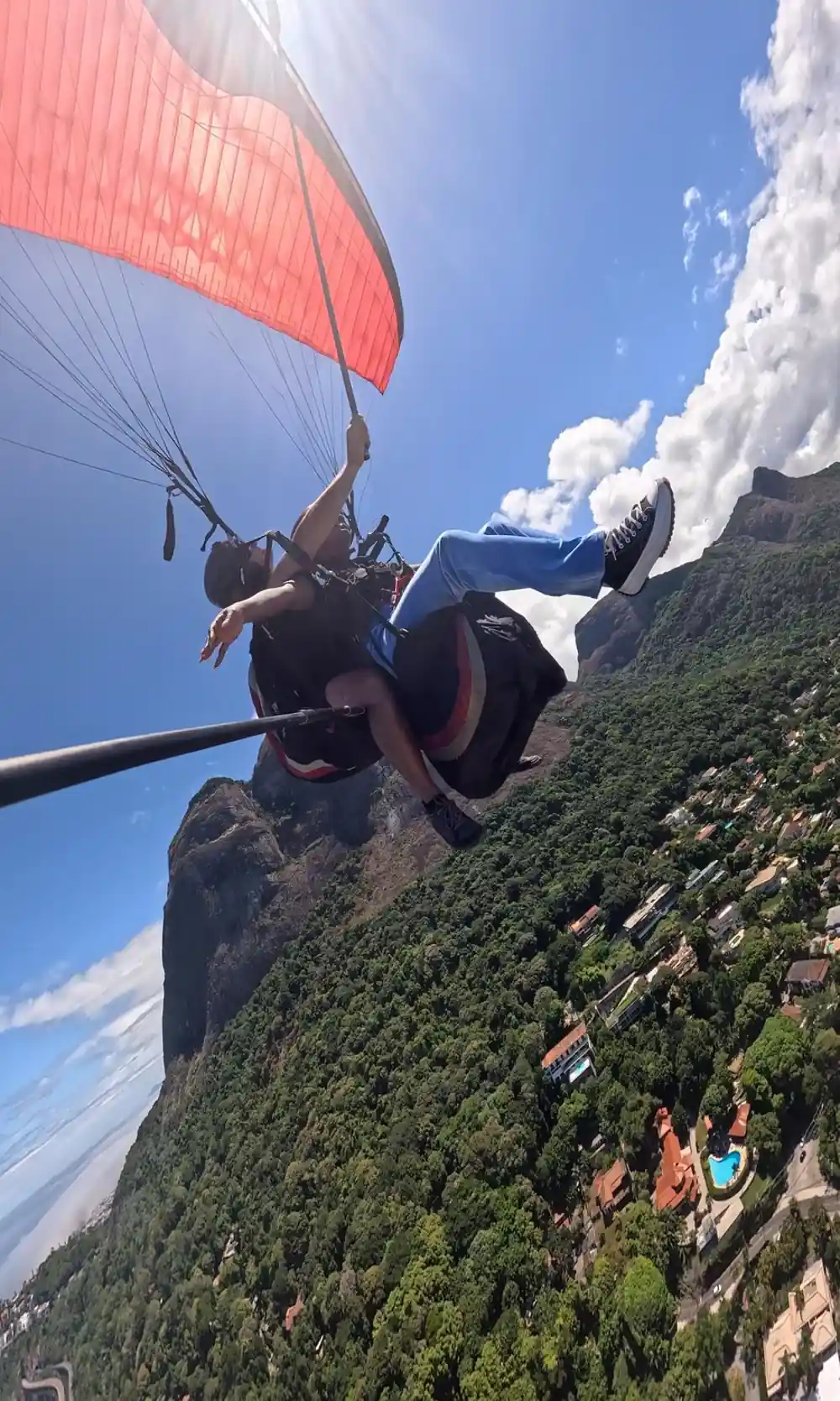
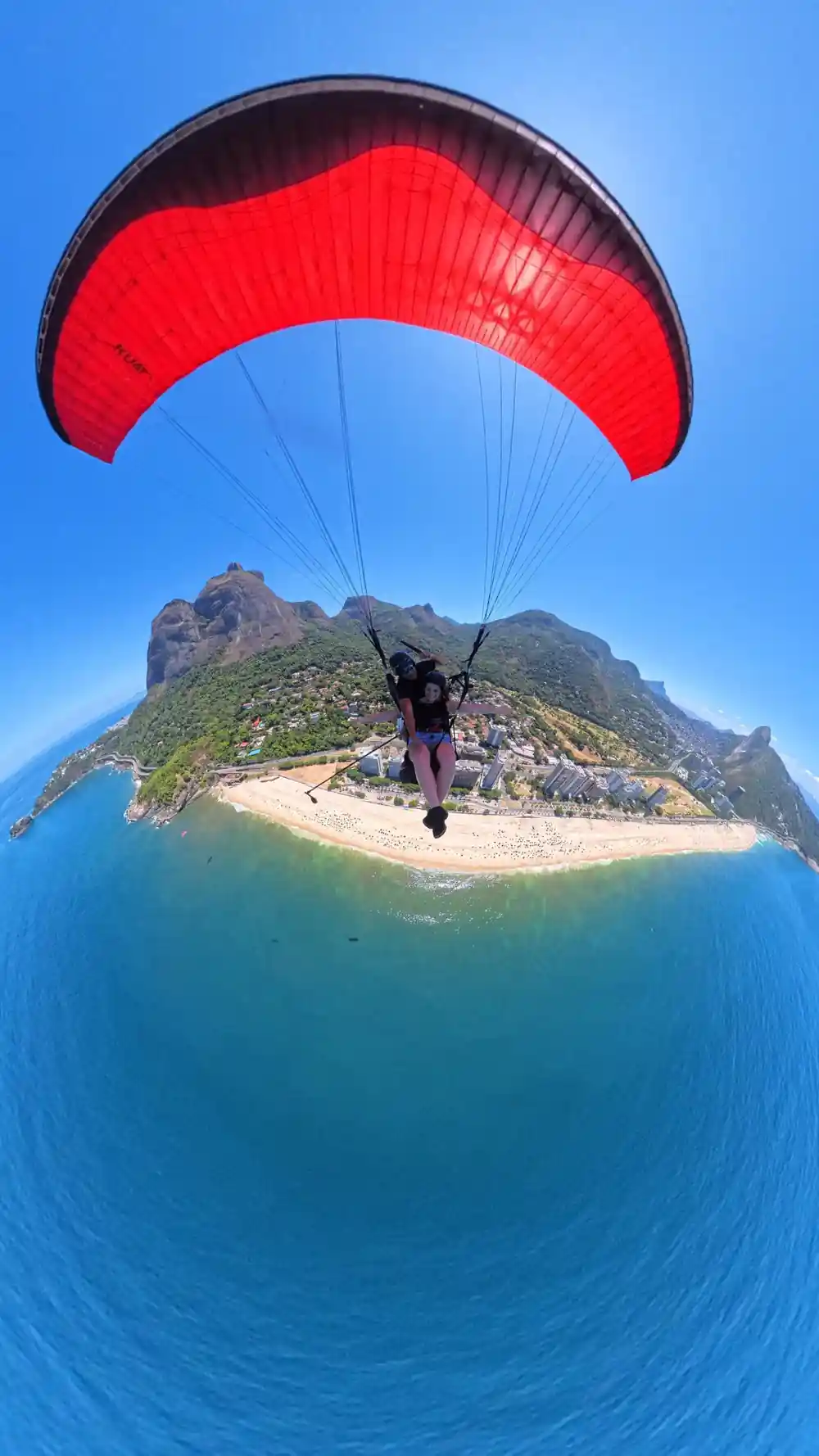
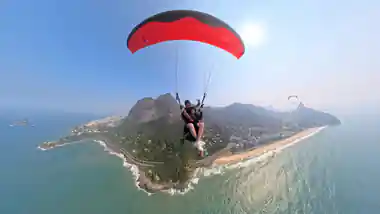
That difference is not a technicality, it changes what the flight actually is. A wing that is flying can be turned, held level and brought down gradually rather than dropped all at once. On this flight the wing carries two people: the instructor, Sandro Cardoso, and the passenger, clipped into a harness fixed to that same wing. Both of you fly it together, from the run off the ramp at Pedra Bonita to the landing on São Conrado beach below.
Who Is Actually Flying You
You are not expected to fly anything. Sandro Cardoso is the instructor on this booking, and he controls the wing for the whole flight, from the launch at the Pedra Bonita ramp to the landing on São Conrado beach. Your harness sits in front of his on the same wing, so he can see everything ahead of you as well as the wing itself, and every decision about speed, direction and the approach to the beach is his to make.
The flight is guided in English, Spanish, Portuguese and French, so a briefing in a language you actually follow is part of the booking rather than something you have to hope for. Being flown rather than flying is what makes a first attempt at this workable at all: steering the wing, reading conditions and judging the landing are not a passenger's job, on this flight or any tandem flight.
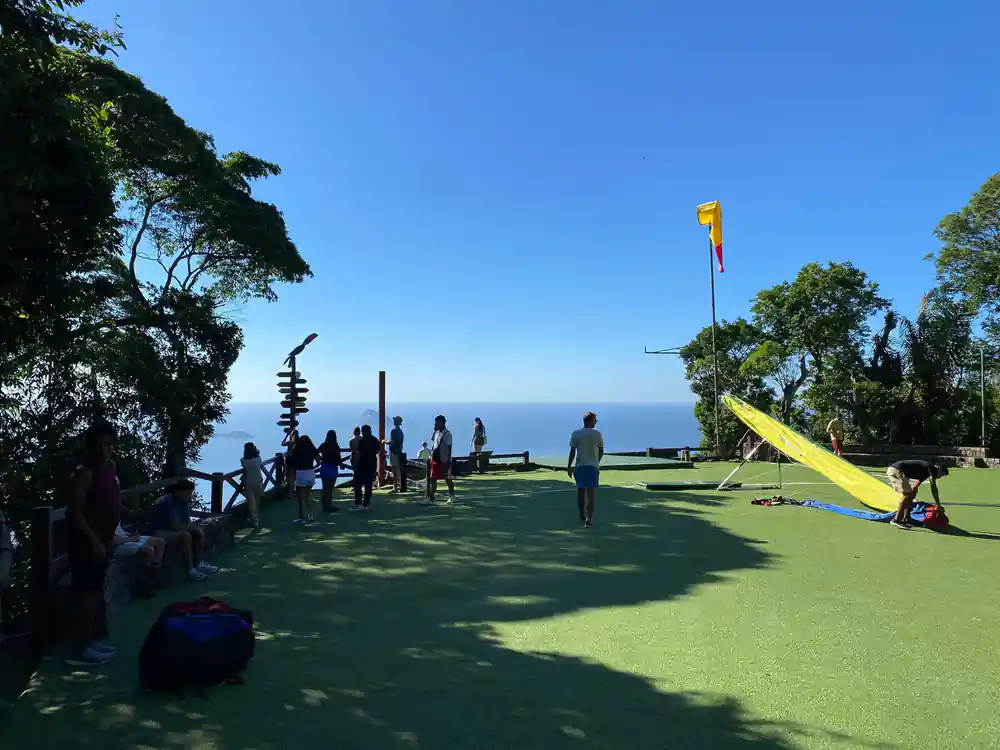
The wing filled with air on the ramp at Pedra Bonita, moments before the launch.
What Decides Whether You Fly
The most useful thing to understand before booking is that the flight happens when conditions above Pedra Bonita allow it, not on a fixed clock that runs regardless of what the day is doing. That is true of every tandem flight from that ramp, and it is worth knowing before you arrive rather than discovering it on the day.
If conditions are not right, the flight does not go ahead as planned, and free cancellation is offered for exactly that reason. A day that gets delayed or called off is not the booking going wrong. It is the same judgement that lets every flight run safely on the days it does go ahead, applied honestly on a day that says wait instead. A changed plan is the system doing its job, not bad luck.
Weighing Three Hours Against the View
Three hours is the length of the booking, and on a short trip to Rio that is a real amount of time to give up, not a rounding error in the schedule. The shape of it is roughly this: you meet at the flight club in São Conrado, the drive up to the Pedra Bonita ramp takes about fifteen minutes, and the ramp itself, launch and flight together, takes about forty minutes. Most of what is left in the three hours is waiting for conditions to be right, not time spent doing anything in particular.
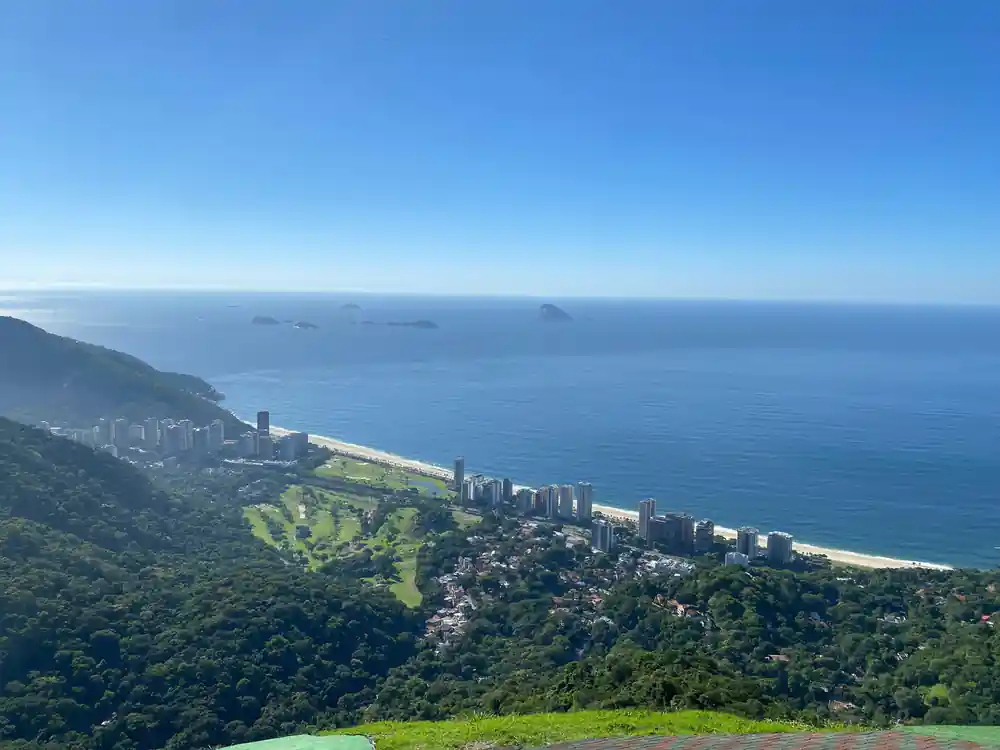
Set against that, what you get is a view of the city that has no other way of being reached: the Tijuca forest, the ridge above São Conrado, and the beach and the city laid out below, seen while moving through the air rather than looking up at it from the ground. Whether that is worth three hours of a trip that might only run a few days is a genuinely personal calculation, and it depends on how much a short visit to Rio can spare and how much that particular view is worth to you.
4 languages
The flight is guided in English, Spanish, Portuguese and French, so the briefing happens in a language you actually understand.
What the Day Includes, and What It Does Not
The booking includes GoPro footage of the entire flight, transport from the flight club to the Pedra Bonita ramp, the safety equipment you fly with, and the tandem flight itself from ramp to beach. Before and after, the club at São Conrado has toilets, drinking water, changing rooms and showers, which matters if you are landing on a beach and want to change out of flying gear before getting on with the rest of the day.
A few things are not included, and it is worth knowing about them before you arrive rather than on the day. Footage from the 360 degree camera is not included, and neither is anything you buy at the club, or transport from your hotel to the club and back. The club also charges its own fee on the day, separate from the booking, and it is worth asking about when you arrive so it does not catch you out.
How Frightening It Actually Is
Some of this is true no matter how well the flight is run: you are running off a wooden ramp built out from a hillside, and for a few seconds between the run and the wing taking your weight properly, it does not feel like standing on solid ground. That moment is short, and it is the same moment every tandem passenger goes through, not something particular to how any one person handles heights.
Once the wing has you, the flying itself feels steadier than the launch suggests it will. You are seated in a harness, the instructor is controlling the wing, and the sensation is closer to being carried than to falling. How that lands for you depends on how you personally respond to being off the ground, and no page can promise that feeling away in advance.
What to Ask Before You Book
A short list of direct questions serves a nervous flyer better than a long one. Confirm you are not booking for a child under fourteen, a pregnant traveller, or anyone over 100 kilograms, since none of those bookings can fly on this trip regardless of how the day looks. Ask about the club fee charged on arrival, since it is a real, separate charge from the booking and it is better to know it exists before you are standing at the club.
It is also worth asking what happens to your booking if the flight is called off for the day, and the answer is straightforward: free cancellation is offered, because conditions above Pedra Bonita are the one thing nobody controls. Beyond that, ask whichever question is actually on your mind about the instructor, the wing or the landing. A straight answer to a direct question tells you more about how the day is run than anything written on a page.
Check dates for your Rio paragliding flight
from US$178Reserve now & pay later